In today’s fast-changing tech world, a Protection Controllerhonestly plays a pretty crucial role in keeping systems and data safe. I mean, John Smith from SecureTech Innovations even says, "Having a Protection Controller is really key for staying ahead with security." That just shows how important these devices are in the digital age we’re living in.
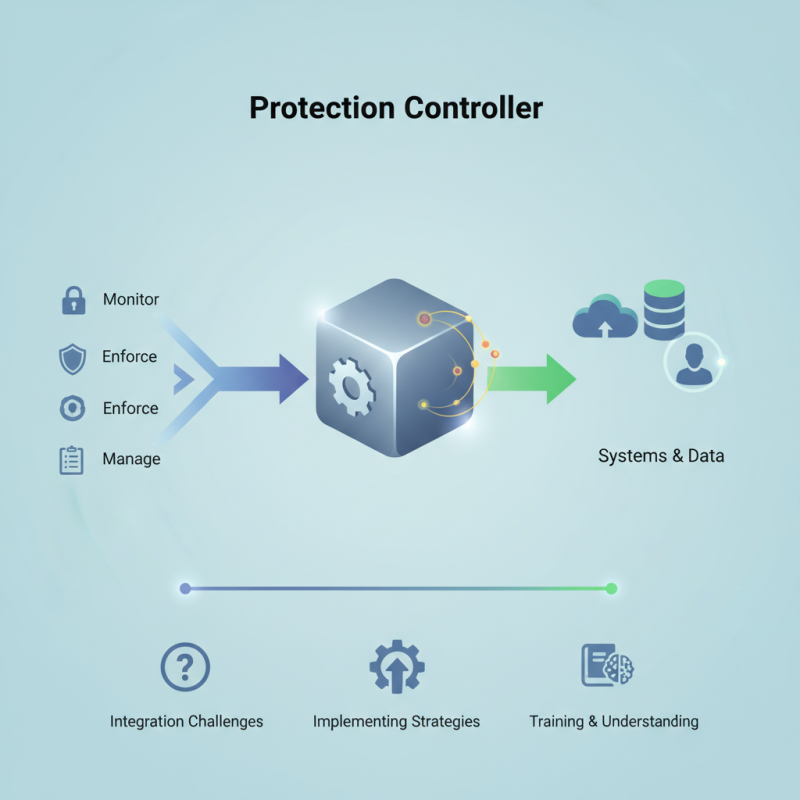
Basically, Protection Controllers are built to monitor, enforce, and manage security policies across different platforms. They help make sure sensitive info stays protected from unauthorized access. Now, I get it—at first glance, all these technical details can seem pretty overwhelming or complicated. But understanding how they work is actually super important if your business wants to step up its security game.
Really, a lot of organizations are kind of struggling with how to integrate and make the most out of Protection Controllers. Some just aren’t sure what strategies work best, or they find the tech a bit daunting to get a handle on. Even though the technology itself is pretty impressive, the learning curve can be steep. People are definitely talking about it more now, and there’s a real need for better training and guidance in the industry to help folks get comfortable with these tools.
What is a Protection Controller?
A Protection Controller is essential for ensuring safety in various environments. It serves as a regulatory system that monitors conditions and responds to potential hazards. This device can manage multiple parameters like temperature and pressure. By doing so, it prevents damage to equipment and protects personnel from dangerous situations.
The technology behind a Protection Controller is fascinating yet complex. Sensors gather real-time data, which the controller analyzes. If any measurement falls outside the safe range, the controller triggers alerts or activates protective measures. However, not every controller is perfect. Sometimes, they can misinterpret data, leading to false alarms. This highlights the need for regular calibration and maintenance.
Another aspect of Protection Controllers is user interaction. Operators often have to interpret alerts and take action. In busy environments, this can lead to mistakes. Users might overlook warnings or misjudge the severity of a situation. Training is vital to minimize these errors. A well-implemented system boosts confidence and enhances safety. But it requires ongoing effort and attention to detail.
The Purpose of Protection Controllers in Systems
Protection controllers play a crucial role in modern industrial systems. They act as guardians for motors, ensuring safe operation and preventing damage. With the rise of automation, a study by the International Electrotechnical Commission reveals that motor failures account for up to 40% of industrial downtime. This emphasizes the importance of having an efficient Motor Protection Controller in place.
These controllers monitor key parameters such as overloads, under-voltage, and phase loss. For instance, if a motor overheats, the protection controller can disconnect power instantly. A report from the American National Standards Institute states that effective protection reduces maintenance costs by 20%. However, not all systems utilize these controllers properly. Some industries still rely on outdated methods, leaving them vulnerable to risks.
Additionally, the configuration of protection settings often requires expert knowledge. Many engineers may not fully understand the nuances involved. This gap can lead to suboptimal operations. Addressing these challenges is vital for increasing reliability in motor-driven processes. Integrating advanced Motor Protection Controllers can provide significant benefits. The data supports this, showing a marked improvement in operational efficiency when proper protective measures are implemented.
Protection Controller Efficiency Over Different Time Periods
Key Components of a Protection Controller
A Protection Controller is crucial in managing electrical systems. It ensures safe operation by monitoring and managing various parameters. Key components include sensors, relays, and communication interfaces. Sensors detect anomalies, while relays act on this information. They can disconnect the system in case of faults.
The Controller Protection Board integrates these components effectively. It processes the data collected and issues commands based on predefined settings. The design of this board may vary, but clarity and reliability are essential. A poorly designed board could lead to misinterpretations of data. This can result in unnecessary disruptions.
The communication interface plays a key role in system integration. It connects the Protection Controller to the larger system. This connection allows for data sharing and remote monitoring. However, potential communication failures can undermine system reliability. Ensuring robustness in these connections is vital for overall effectiveness. Balancing complexity and user-friendly design often presents challenges that require reflection.
What is a Protection Controller and How Does it Work? - Key Components of a Protection Controller
| Component | Description | Functionality | Importance |
| Sensors | Devices that detect changes in the environment, such as temperature, humidity, or fault conditions. | Monitor real-time conditions. | Critical for early detection of potential problems. |
| Control Logic | The algorithm or programming that determines how the controller reacts to sensor inputs. | Decides the actions based on sensor data. | Ensures appropriate response to varying conditions. |
| Output Devices | Devices that carry out actions such as alarms, actuators, or circuit breakers. | Implement control actions or alert personnel. | Essential for executing protective measures. |
| User Interface | The display and control panel that allows users to interact with the protection controller. | Facilitates monitoring and manual control. | Important for ease of use and configuration. |
| Communication Interfaces | Protocols that enable data exchange between the controller and other systems. | Allows integration and data sharing. | Crucial for interoperability with other equipment. |
How Protection Controllers Operate
Protection controllers play a critical role in managing power systems. In essence, they monitor and regulate electrical inputs to ensure optimal performance and prevent damage. These controllers assess voltage and current levels to safeguard electronic devices. According to industry reports, implementing effective protection controllers can reduce equipment damage by up to 40%.
How do protection controllers operate? They utilize real-time data to make immediate decisions. For example, if voltage spikes occur, the controller automatically disconnects the system, thereby preventing potential damage. Their complex algorithms analyze the incoming power source continuously. A single failure point can escalate issues, leading to expensive repairs or downtime. The Charging Controller Protection Board enhances this protective capability, offering an additional layer of security.
In practice, these devices are not without their flaws. Sometimes, they may react too slowly to sudden changes. This delay could have severe implications. Regular updates and adjustments are crucial for maintaining efficiency. The key is to stay informed about industry standards and technological advancements. Every improvement can make a difference in protecting sensitive equipment.
Common Applications of Protection Controllers
Protection controllers have become essential in various sectors. They manage and coordinate safety systems, particularly in industrial settings. According to a recent report by Global Market Insights, the demand for advanced protection controllers is expected to grow at a rate of 7% annually. This is influenced by the increasing need for reliability in safety systems.
Common applications of protection controllers include energy management, automation, and industrial safety. In energy management, they safeguard equipment by detecting faults. For instance, they can prevent overload situations that could lead to equipment failure. In automation, protection controllers ensure operational efficiency. They facilitate safe interactions between machines and workers. However, implementing these systems is not always flawless. Many industries struggle with integration issues, leading to potential risks.
In industrial safety, protection controllers play a critical role. They monitor critical processes to avert hazards. The CDC reported that workplace incidents could be reduced by nearly 20% through better safety controls. Nonetheless, organizations often overlook the necessity of regular updates and training. This negligence can undermine the effectiveness of these systems. Addressing these challenges will shape the future of protection controllers in our rapidly evolving technological landscape.
Benefits of Using Protection Controllers
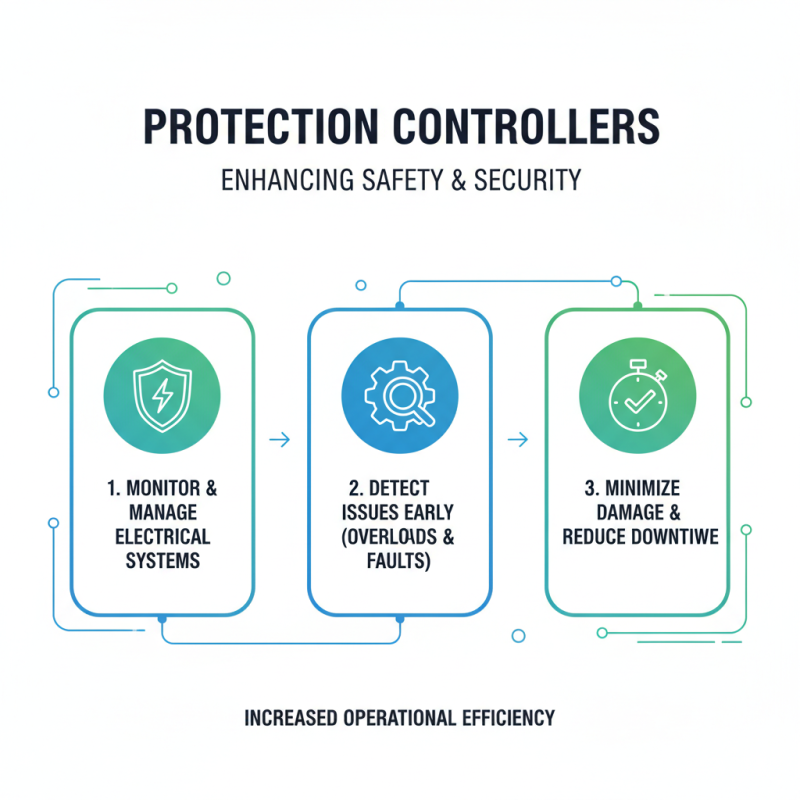
Protection controllers play a vital role in enhancing safety and security in various applications. These devices monitor and manage electrical systems, safeguarding against overloads and faults. By detecting potential issues early, protection controllers minimize damage and ensure operational efficiency. Users can benefit from reduced downtime during repairs and maintenance.
One significant advantage of using protection controllers is their ability to facilitate rapid response to faults. Automated alerts help operators take immediate action to prevent accidents. This promptness can save money and resources in the long run. However, reliance on these technologies can lead to complacency. Operators may overlook manual checks, assuming the controller is infallible.
Moreover, protection controllers can provide data analytics, which enhances decision-making. Insights into system performance allow for better planning and resource allocation. Yet, some organizations may struggle with interpreting this data effectively. Misunderstandings can lead to poor strategic choices and wasted efforts. Maintaining a balance between automation and human judgment is crucial for maximizing benefits.
Challenges and Limitations of Protection Controllers
Protection controllers play a crucial role in managing electrical systems, but they face several challenges. One significant issue is their complexity. Many operators find it difficult to navigate the settings. Training staff to use these systems effectively can be time-consuming. Additionally, the interface may not be user-friendly. This can lead to misconfigurations and, ultimately, system failures.
Moreover, reliability is a constant concern. Protection controllers must respond swiftly to faults. However, they can sometimes fail to operate as expected. Environmental factors, like temperature and humidity, might affect performance. Regular maintenance is essential. Without it, the controller could misjudge a hazardous situation.
Another limitation is the compatibility with other devices. Not all systems integrate seamlessly. This can lead to gaps in protection. For instance, a Transfer Switch Protection Controller might not work well with older equipment. These compatibility issues can hinder the effectiveness of the overall protection strategy. Addressing these challenges is vital for enhancing system reliability and safety in the long run.
FAQS
: The product aims to simplify daily tasks and enhance efficiency. Users can save time and energy.
It is designed for a wide audience. However, individual needs vary. Some may find it less useful.
Regular use is recommended for best results. However, overuse can lead to diminishing returns.
Yes, there are limitations. The product may not work equally well in all situations or for all users.
Return policies vary by vendor. It’s important to check the specific policies before purchasing.
Users can access online guides and support forums. However, responses may take time.
Yes, basic maintenance is needed to ensure optimal performance. Neglecting this may reduce efficiency.
Error handling varies. Some issues may require user intervention, while others resolve automatically.
Troubleshooting steps are available online. However, some problems may not have clear solutions.
It can adapt to various settings. Yet, performance might decline under certain conditions.
Conclusion
A Protection Controller is a critical component in various systems, primarily designed to ensure the safety and reliability of electrical circuits and devices. Its main purpose is to monitor and manage operating conditions, preventing damage caused by overloads, short circuits, or other electrical faults. Key components of a Protection Controller typically include sensors, relays, and communication interfaces, which work together to detect anomalies and trigger appropriate responses.
The operation of Protection Controllers involves real-time monitoring and analysis of electrical parameters, enabling timely intervention when irregularities arise. They find common applications in industries such as power generation, telecommunications, and manufacturing, contributing significantly to operational efficiency and equipment longevity. The benefits of using Protection Controllers encompass enhanced system reliability and reduced maintenance costs; however, challenges include integration complexities and the need for regular updates to adapt to evolving technology. Overall, Protection Controllers play a vital role in safeguarding systems against electrical hazards.

 +86 13868429846
 Contact Phone
 Contact Email