Leave Your Message
0%

Picking out the right Switch Capacitor Contactor can feel kinda overwhelming sometimes. I mean, with so many options out there, it’s super important to make sure you’re making an informed choice. The contactor you go with isn’t just a small detail—it's a big deal because it can really affect how reliable and efficient your setup is.

Start by thinking about what you actually need. Are you running something that's demanding a lot of power? When you're looking at voltage ratings and switching capacity, don’t just skim over them—these things matter. A good quality Switch Capacitor Contactor can actually boost your power factor, which means you could save some serious energy costs in the long run.

And don’t forget to be aware of common pitfalls. A lot of folks overlook whether the contactor will play nicely with their existing systems, and that can lead to some costly problems down the line. Do your homework, ask around, maybe even chat with a few experts. Sometimes, a small oversight can turn into big headaches later on. So yeah, taking the time to choose carefully is totally worth it—it’ll pay off in the long run, trust me.
2026 How to Choose the Right Switch Capacitor Contactor?

Understanding the Role of Switch Capacitor Contactors in Power Systems

2026 How to Choose the Right Switch Capacitor Contactor?

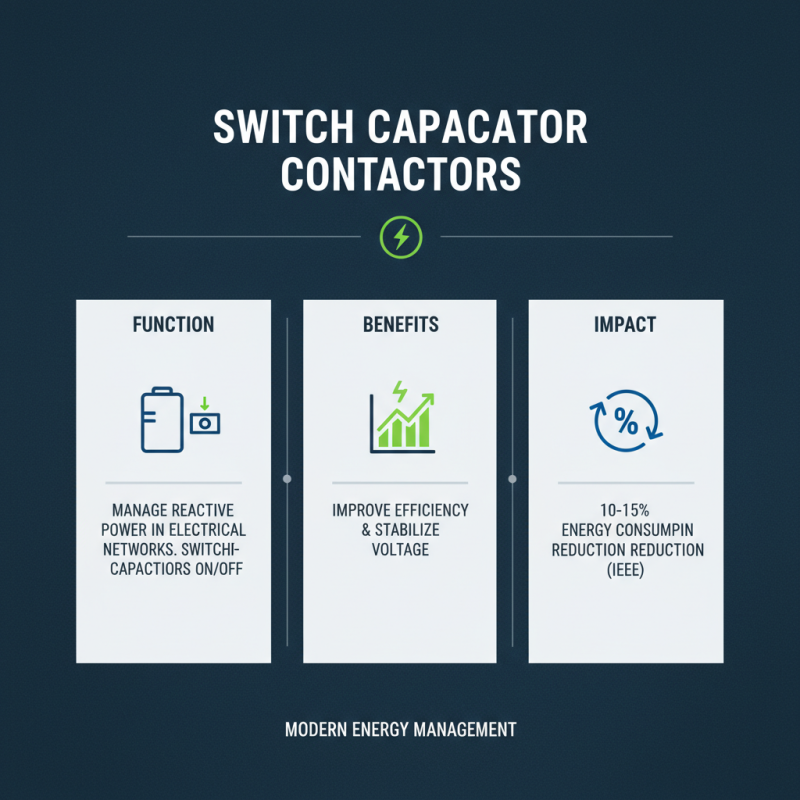
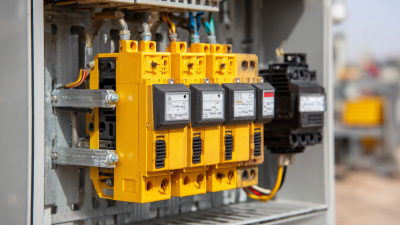
Switch capacitor contactors play a vital role in power systems. These devices help manage reactive power in electrical networks. By switching capacitors on and off, they improve efficiency and stabilize voltage levels. According to the IEEE, effective use of switch capacitor contactors can lead to a 10-15% reduction in energy consumption. This highlights their significance in modern energy management.

In choosing the right switch capacitor contactor, several factors come into play. The voltage rating, current carrying capacity, and the switching frequency are crucial. Industry reports indicate that improper selection may lead to equipment failure or ineffective power management. An Electromagnetic Switch Contactor must match system requirements closely to function optimally. It’s essential to analyze load profiles and switching cycles carefully.

Many utilities have adopted advanced models to enhance performance. However, some still rely on outdated technologies. This raises concerns about reliability and efficiency. Continuous performance monitoring is necessary for improvement. Understanding the role of switch capacitor contactors is critical for optimizing power systems and maximizing savings. Ignoring these factors could lead to wasted resources and missed opportunities for enhancement.

Key Specifications and Ratings for Selecting Switch Capacitor Contactors

Choosing the right switch capacitor contactor involves understanding key specifications and ratings. These elements significantly influence the performance and efficiency of electrical systems. The interrupting capacity is one of the main considerations. This rating determines how much fault current a contactor can safely interrupt. An inadequate rating can lead to equipment damage. Many professionals overlook this factor, risking system failures.

Another crucial specification is the voltage rating. It reflects the maximum voltage the contactor can handle. Selecting a contactor with a voltage rating that exceeds the system's requirements ensures reliability. However, some users may choose lower-rated contactors to save costs, not realizing the long-term risks. A comprehensive report indicates that about 30% of failures are due to incorrect voltage ratings.

Current ratings are also vital. They define how much load a contactor can handle continuously. Many engineers ignore continuous ratings, which can lead to overheating issues. For instance, a study showed that 25% of contactor failures stem from exceeding current limits. It's essential for operators to consider these specifications when integrating Intelligent Switch options into their systems. They must ensure the chosen device meets all system demands for maximum efficiency and safety.

Evaluating Voltage and Current Requirements for Capacitive Loads

When selecting a switch capacitor contactor, understanding voltage and current requirements is crucial. Capacitive loads can behave differently under varying conditions. They often require higher inrush current upon activation. It is essential to calculate this inrush to avoid damaging the contactor. A good rule of thumb is to choose a contactor rated for at least three times the normal operating current.

Tips: Always check manufacturer ratings for inrush currents. Load characteristics might differ, so don’t rely solely on one measurement.

Voltage ratings also play a significant role. Using a contactor rated significantly lower than the voltage can lead to failures. Ensure that the contactor operates within the ideal voltage range. This is particularly critical during power surges, which can occur unexpectedly.

Tips: Monitor the load's voltage fluctuations. Evaluate environmental conditions as they can impact performance. Ideally, design for worse-case scenarios.

Consider the operating frequency too. High-frequency operations may require contactors that can handle quick cycling. A mismatch here can result in overheating or premature failure. Always validate how frequently the contactor will be activated.

Tips: Conduct routine maintenance checks to track performance. This can help in identifying potential issues early.

Voltage and Current Requirements for Switch Capacitor Contactors

Importance of Environmental Conditions in Contactor Selection

When selecting a switch capacitor contactor, environmental conditions play a crucial role. Factors like temperature, humidity, and pollution levels can significantly affect the performance and lifespan of the equipment. For instance, a contactor used in a high-moisture environment may corrode faster than expected. This can lead to failures that are costly and time-consuming to fix.

It's essential to assess the installation site carefully. High temperatures can cause overheating, leading to early equipment failures. On the other hand, extreme cold can result in sluggish operation. Remember that dirt and dust can impact electrical contacts too. Regular maintenance is often overlooked but is vital for longevity.

Vibration and exposure to chemicals can also alter the effectiveness of your Mcb Automatic Switch. Therefore, ensure that your choice is suitable for specific conditions. Testing different scenarios can reveal unforeseen issues. Ultimately, the right contactor should align with both operational needs and environmental challenges. Proper selection may seem simple, but it often requires deeper thought and reflection.

Analyzing Switching Frequency and its Impact on Performance

2026 How to Choose the Right Switch Capacitor Contactor?

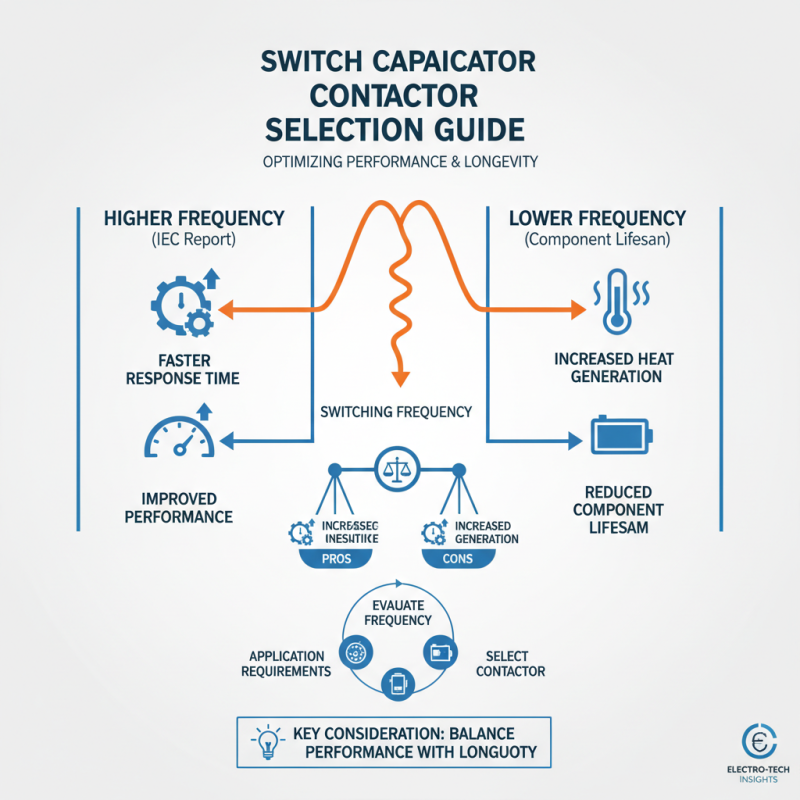
Choosing the right switch capacitor contactor requires careful consideration of various factors. One critical aspect is switching frequency, which plays a significant role in performance. A report by the International Electrotechnical Commission indicates that higher switching frequencies generally lead to better response times. However, this can also increase heat generation, affecting the lifespan of components.

Switching frequencies between 10 kHz and 100 kHz are common in many applications. At 25 kHz, contactors often operate efficiently with minimal overheating. Operating beyond this range may cause increased harmonic distortion. It can trigger more electromagnetic interference, complicating system design. Engineers need to strike a balance.

Analyzing the impact of switching frequency is not straightforward. For instance, some applications may demand higher frequencies to achieve better control. Others might suffer from overheating at even moderate frequencies. It appears that a frequency that works for one system may fail in another. Ultimately, real-world testing remains crucial to understand performance limits. Each application has unique needs that require tailored solutions.

Comparative Assessment of Contact Materials in Contactors

When selecting a switch capacitor contactor, the choice of contact materials is crucial. Different materials exhibit distinct performance characteristics. Silver, for instance, offers excellent conductivity and is commonly used in many applications. A study shows that silver contacts can reduce resistance significantly, leading to better energy efficiency. However, silver is susceptible to oxidation. This can diminish performance over time.

Copper alloys are another option. They provide better mechanical strength but may not match silver’s conductivity. One report highlights that copper contacts can wear more quickly under high-frequency operations. Users must consider the environment, as contaminants can affect contact performance. Understanding these nuances is essential when assessing contacts for longevity and reliability.

Moreover, contact welding is a concern in high-load scenarios. Materials need to be chosen carefully to minimize this risk. In high-load applications, selecting the right contact material can prevent failures. More research is needed to quantify these effects under varying conditions. Balancing material selection with operational demands is often challenging but necessary for the best outcomes.

Industry Standards and Compliance for Switch Capacitor Contactors

When selecting switch capacitor contactors, industry standards play an essential role. Compliance with regulations ensures safety and efficiency in electrical systems. The IEEE Standard 399 outlines best practices for power system reliability. Adhering to these standards can reduce maintenance costs significantly.

Additionally, understanding the National Electrical Code (NEC) requirements is crucial. The NEC provides guidelines for sizing and installation. It specifies the proper functioning of switch capacitor contactors within the electrical system. For instance, ensuring adequate short-circuit protection can prevent failures. Reports indicate that improperly sized contactors increase the risk of equipment damage.

Evaluating compliance can be challenging. Not all manufacturers provide clear documentation. This ambiguity complicates the decision-making process. Often, buyers overlook these aspects when purchasing equipment like Wifi Mcb Switch Circuit Breakers. A comprehensive review of specifications and certifications is necessary. Flaws in documentation might indicate subpar quality. Ignoring these details can lead to costly mistakes.

2026 How to Choose the Right Switch Capacitor Contactor? - Industry Standards and Compliance for Switch Capacitor Contactors

Criteria Details Industry Standards Compliance
Voltage Rating Ensure the contactor can handle the system voltage IEC 60947-4-1 UL Listed
Current Rating Select according to the load requirements NEMA MG1 CSA Certified
Control Voltage Check compatibility with control systems IEC 60204-1 CE Marked
Number of Poles Determine based on circuit configuration IEC 60947-2 RoHS Compliance
Application Type Evaluate environmental conditions and applications ISO 9001 ISO 14001

Understanding the Essential Role of Photovoltaic DC Miniature Circuit Breaker Switches in Solar Energy Systems

Photovoltaic DC miniature circuit breakers (MCBs) play a crucial role in the safe and efficient operation of solar energy systems. These devices are essential for on/off control and fault protection, ensuring that the high voltage and high current characteristics of DC circuits in photovoltaic (PV) systems are handled effectively. One of the primary application scenarios for these circuit breakers is within the combiner box at the PV module side, where they safeguard individual PV modules or strings. By preventing issues such as short circuits or overloads from affecting the entire array, PV DC MCBs are vital in maintaining the integrity and reliability of solar installations.

Another important application of PV DC circuit breakers is at the inverter front end, where they serve as a safety mechanism. When an inverter experiences a failure or requires maintenance, these circuit breakers can rapidly disconnect the DC power supply, effectively protecting both equipment and personnel from potential hazards. Additionally, in systems that combine photovoltaic energy generation with energy storage, the circuit breakers control the interface between the PV DC side and the battery system. This ensures that failures in the energy storage system do not adversely impact the performance of the PV array, thereby enhancing overall system resilience.

In large-scale photovoltaic power plants, DC merging links benefit from the protective capabilities of these miniature circuit breakers. As multiple PV strings converge, these breakers ensure a stable and safe current flow during the merging process, reducing the risk of safety hazards such as arcing. Given the complexity and potential risks associated with DC circuits in solar energy systems, the unique requirements for high-voltage resistance and arc-extinguishing capability in these circuit breakers highlight their essential role in promoting safe and efficient solar energy generation.

FAQS

: What are the common benefits of this product?

: Users often report improved efficiency and productivity. Many experience reduced stress levels over time.

How do I use this product effectively?

Read the instructions carefully. Practice regularly to become familiar with its features and functions.

What should I do if I encounter issues?

Check the troubleshooting guide first. Reach out to customer support if problems persist.

Can this product be used by anyone?

Generally, yes. However, users may need to adapt to different features based on individual needs.

How often should I clean the product?

Clean it regularly to maintain performance. Depending on usage, weekly cleaning might be necessary.

What if I’m not satisfied with the results?

Reflect on your usage and adjust accordingly. Consider seeking advice from other users for tips.

Is there a warranty available?

Yes, most come with a warranty period. Check the details to understand the coverage and limitations.

Are there any common mistakes to avoid?

Yes, neglecting to follow guidelines can lead to inefficiencies. Skipping regular maintenance is a frequent error.

Conclusion

The article "2026 How to Choose the Right Switch Capacitor Contactor?" provides an in-depth guide for selecting the appropriate Switch Capacitor Contactor for power systems. It begins by highlighting the crucial role these contactors play in managing capacitive loads effectively. Key specifications and ratings are discussed, focusing on understanding voltage and current requirements specific to capacitive applications.

The importance of environmental conditions during selection is emphasized, as these factors can significantly impact the performance and longevity of contactors. The article further analyzes the significance of switching frequency and its effects on operational efficiency. Additionally, a comparative assessment of contact materials informs readers about their implications for reliability and durability. Finally, a review of industry standards and compliance ensures that the chosen Switch Capacitor Contactor meets all necessary regulations, aiding in making an informed decision to enhance power system performance.
Ethan

Ethan

Ethan is a dedicated marketing professional at Zhejiang Shuorui Electric Co., Ltd., located in the heart of Wenzhou, Zhejiang, the electrical capital of China. With extensive knowledge of the electrical industry, Ethan plays a pivotal role in promoting the company’s innovative products and......
Previous How to Choose the Best Voltage Regulators Stabilizers for Your Power Needs