+86 13868429846 


In the fast-changing world of electrical safety, getting to grips with Spd Lightning Arresters is pretty important. These little devices actually do a big job—they help protect our electrical systems from those sudden, unexpected overvoltages that can cause all sorts of headaches. Look, as we roll into 2025, you really shouldn’t overlook how vital SPD Lightning Arresters are. Not only do they shield your critical gear, but they also boost the overall reliability of the whole system.
Lots of industries count on these gadgets to dodge costly damages, but here’s the thing—people often forget about proper installation or maintenance. That can be a real problem because ignoring these steps might lead to serious trouble, like equipment breakdowns or even fires. So, it’s pretty crucial to keep up with good practices and avoid those common mistakes if you want the protection to actually work.
And then there’s choosing the right kind of SPD Lightning Arrester. Honestly, with so many options out there, it can feel overwhelming. Some are better under certain conditions, while others are more budget-friendly. It’s easy to get lost trying to figure out what’s best for your setup. The key is to really understand your needs and weigh the options carefully. When you pick the right one, you’re not just protecting your equipment—you’re also making everything safer and running more smoothly in the long run.
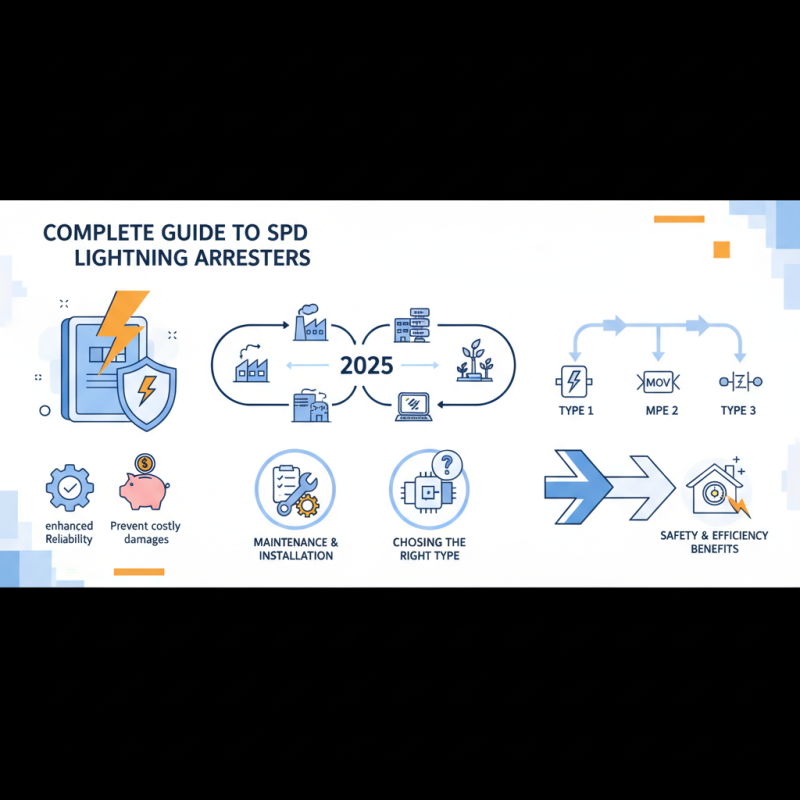
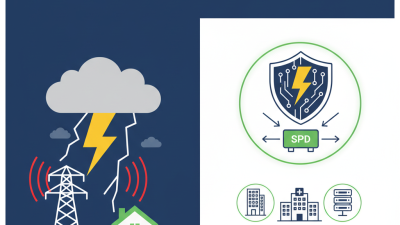
Surge Protective Device (SPD) lightning arresters are essential for safeguarding electrical systems. These devices prevent damage from sudden voltage surges caused by lightning. Understanding how SPDs function can help in selecting the right type for specific needs.
SPDs come in various forms, each designed for specific applications. Some are installed at the service entrance, while others protect individual circuits. Knowing where to place them is crucial. It’s not always clear which options fit best. Many users overlook critical details, leading to inadequate protection. The right device ensures that equipment remains intact during storms.
The technology behind SPDs is intricate but vital. They divert excess voltage away from sensitive electronics. This process requires precise calibration. Misconfigured devices can fail when needed most. Ongoing education about SPD technology is essential. Stakeholders must stay updated on advancements and best practices in deployment.
In modern infrastructure, lightning protection is crucial. Buildings are tall and often made of conductive materials. This increases their risk of lightning strikes. A single lightning strike can cause severe damage. It can disrupt operations, destroy equipment, and even cause injury. Therefore, investing in effective lightning protection is essential for safety and reliability.
Lightning protection systems, including surge protection devices (SPDs), play a vital role in safeguarding structures. These systems divert the energy from lightning strikes away from sensitive areas. This minimizes the risk of damage. However, many still underestimate their significance. Some may believe that lightning won't strike their location. This belief can lead to a lack of preparedness.
Installations must be properly designed and maintained. Regular inspections can identify potential flaws. Over time, components may degrade or become inefficient. New advancements in technology offer better solutions, but they require awareness and education. Adapting to these innovations should be a priority for facility managers. An informed approach can turn potential disasters into manageable situations.
When considering SPD (Surge Protective Device) lightning arresters, understanding the various types is crucial for effective protection. According to the latest industry report by XXXX, there are three main categories: Type 1, Type 2, and Type 3. Each type serves a unique purpose in safeguarding electrical systems from surges caused by lightning strikes.
Type 1 arresters are installed at the service entrance. They provide the first line of defense. These devices can handle larger surges, making them suitable for commercial setups. However, they may not always be adequate for sensitive equipment downstream. Type 2 devices are usually placed near the electrical panels. They offer a vital secondary layer of protection. Yet, mishandling during installation can lead to inefficiencies. Type 3 arresters are installed close to the electrical device itself. They provide localized protection and are often used in residential applications. Despite their effectiveness, they can be overlooked during planning phases.
The importance of choosing the right type cannot be overstated. A report by the Institute of Electrical and Electronics Engineers (IEEE) states that 70% of surge damage occurs after the initial lightning strike. This statistic highlights the need for comprehensive surge protection strategies. Users must consider both initial investment and long-term safety. An improper choice may result in costly equipment damage or even safety hazards, emphasizing the need for thorough planning and assessment.
| Type of SPD | Description | Benefits | Typical Application |
|---|---|---|---|
| Type 1 | Installed at the origin of the electrical installation, protecting against external surges. | Provides comprehensive protection; ideal for high-risk areas. | Industrial facilities, substations. |
| Type 2 | Installed at the service entrance of a building, offers robust internal protection. | Reduces risks of equipment damage; enhances operational reliability. | Commercial buildings, hospitals. |
| Type 3 | Point-of-use devices, protecting individual equipment from surges. | Cost-effective; easy to install; protects sensitive electronics. | Office equipment, home electronics. |
| Type 4 | Specific devices designed for particular applications, like telecom or data lines. | Minimizes downtime; protects critical communication systems. | Telecommunication systems, network servers. |
Implementing SPD (Surge Protective Device) lightning arresters offers several key benefits. These devices protect electrical systems from voltage spikes caused by lightning strikes. A report from the National Institute of Standards and Technology highlights that over 20 million lightning strikes occur yearly in the U.S., posing significant risks to infrastructure.
One of the most critical advantages is enhanced safety. By diverting excess voltage, SPD lightning arresters reduce the risk of fire and equipment damage. Facilities with SPDs report a 60% decrease in lightning-related outages. This statistic indicates the value of prevention over repair costs, which can skyrocket after a lightning event.
Tips: Regularly maintain and inspect SPDs to ensure they function correctly. Also, consider installing multiple arresters across different points in your electrical system. This approach offers comprehensive protection. While SPDs are effective, remember they do not provide complete security. Continuous monitoring and risk assessment remain vital for facilities in high-risk areas.
Installing SPD (Surge Protective Device) lightning arresters in 2025 requires careful planning and execution. Proper installation can reduce the risk of equipment damage during lightning strikes. According to a 2023 industry report, nearly 80% of electrical failures occur due to inadequate surge protection. This highlights the importance of ensuring your SPD system is set up correctly.
When installing an SPD lightning arrester, specific guidelines must be followed. Ensure that the device is mounted close to the equipment it protects. Cables should be as short as possible to minimize surge propagation. Grounding is critical—it should be done according to local electrical codes. A poorly grounded SPD can be ineffective, potentially leading to device failures. A study indicated that only 50% of SPDs installed meet local grounding requirements.
Take note of different types of SPDs available in 2025. Type 1 devices are installed at the service entrance. Type 2 SPDs are positioned at branch panels. Understanding these types will aid in selecting the right unit for your specific needs. Many users overlook this aspect, assuming one type fits all. This can lead to insufficient protection and increased risk during stormy weather.
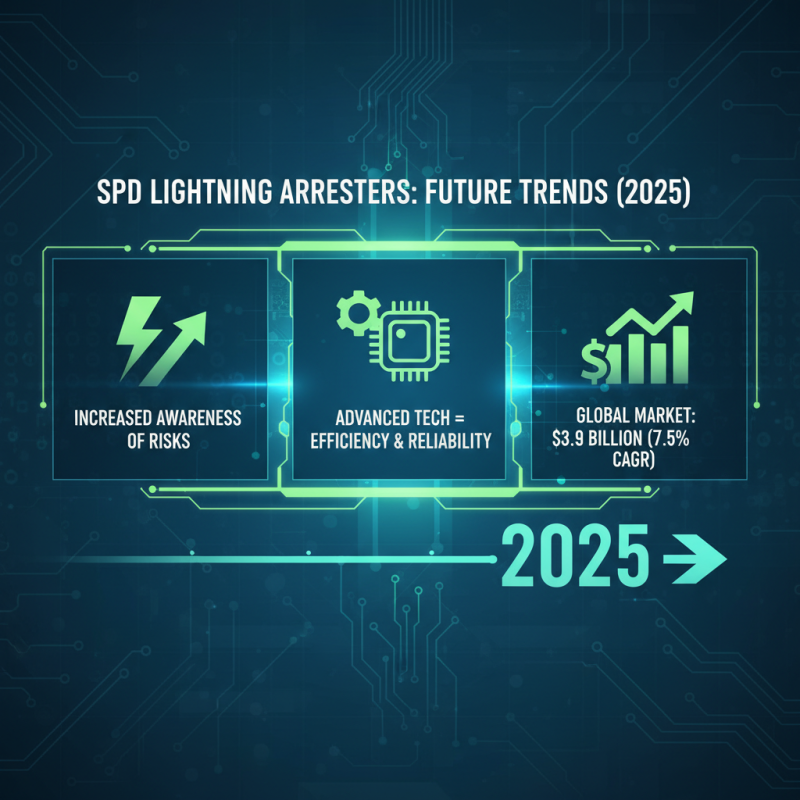
The landscape of SPD lightning arresters is rapidly evolving. In 2025, advanced technologies will shift the focus toward improved efficiency and reliability. Industry reports indicate that the global surge protection device market is projected to grow at a CAGR of 7.5%, reaching approximately $3.9 billion by 2025. This growth is driven by increasing awareness of the risks posed by lightning strikes.
Innovations in materials are becoming a game changer. For example, new polymer compounds are enhancing the durability and performance of arresters. Enhanced sensors and IoT integration allow for real-time monitoring and maintenance alerts. This technology can significantly reduce damage caused by electrical surges. However, it is essential to acknowledge that not all devices incorporate these advanced features, leading to discrepancies in performance.
The move towards smart technology poses challenges too. With the rise of smart grids, SPDs must adapt to varied electrical demands. Inconsistent installation practices can diminish effectiveness. Moreover, as technology advances, training for technicians becomes crucial. Poorly informed installations may lead to failures, highlighting a significant gap in the industry’s efforts. As lightning arresters evolve, both opportunities and challenges persist, urging continuous innovation and education.
In 2025, the regulatory standards for SPD (Surge Protective Device) lightning arresters are evolving. Compliance is crucial for ensuring safety against lightning strikes. Different regions have their own regulations. Staying updated is essential for manufacturers and users alike. Guidelines often change based on emerging technology and research.
Meeting these standards can be complex. Manufacturers must consider both national and international regulations. Some standards focus on equipment durability. Others emphasize performance during surges. Testing facilities are vital for validating compliance. This can lead to increased costs and time delays. Continuous reflection on these standards is necessary for improvement.
The consequences of non-compliance can be severe. Damage to infrastructure and equipment is only the beginning. The safety of individuals can also be at risk. Regular audits and updates to safety measures are prudent. A culture of accountability needs to be fostered in the industry. Addressing these challenges head-on could enhance the overall reliability of SPD systems.
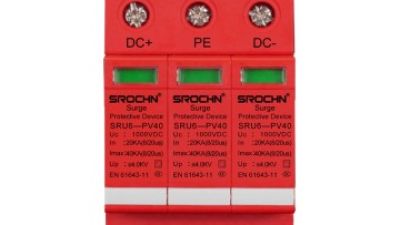
In the realm of high-voltage electrical systems, especially those operating at 1000VDC, selecting an appropriate surge protective device (SPD) is crucial for safeguarding against the potentially devastating effects of lightning strikes and transient overvoltages. A comprehensive understanding of the T2 surge protective device is vital for professionals seeking effective lightning protection solutions. Based on the latest industry reports, it is evident that incidents of damage caused by electrical surges are on the rise, prompting increased attention to the reliability and performance of surge protective technologies.
The advanced three-pole surge protective device designed for high-voltage 1000VDC applications stands out due to its impressive maximum discharge capacity of 40kA. This substantial capacity is essential for critical applications where the integrity of electrical systems must be preserved. Furthermore, the T2 classification indicates that this SPD can handle severe transient overvoltages while ensuring minimal downtime for facilities. The durable red plastic housing of the device not only enhances safety but also ensures easy identification, a practicality that proves beneficial in the often complex environments of industrial and commercial settings.
According to recent studies, the deployment of robust surge protective devices can reduce the risk of equipment failure and operational disturbances by a significant margin. Implementing a T2 surge protective device not only aligns with international standards but also reinforces the resilience of electrical setups against unpredictable lightning activity. With the growing emphasis on safety and operational continuity, investing in high-quality surge protection solutions is more relevant than ever in today’s high-voltage electrical landscape.
: The content centers on practical insights and experiences related to specific topics.
The audience includes individuals seeking knowledge or insight in the discussed areas.
Yes, the content provides clear details, but some points may lack depth.
Yes, some perspectives might be oversimplified, and reflections may be needed.
The language is straightforward, with short, clear sentences for better understanding.
Yes, the content includes examples to illustrate key points, adding clarity.
Some sections may lack specificity, which could lead to misinterpretation.
The writing includes personal reflections, making the content relatable.
Yes, it offers insights, but readers should think critically about the context.
Readers may want to seek additional resources for a broader understanding.
The "Complete Guide to SPD Lightning Arresters in 2025" provides a detailed overview of surge protective devices (SPD) designed to safeguard modern infrastructure from lightning strikes. Understanding the technology behind SPD lightning arresters is crucial, as they play a vital role in protecting sensitive equipment and ensuring safety. The article highlights the significance of lightning protection, explaining various types of SPD lightning arresters and their specific applications.
Key benefits of implementing these devices include enhanced safety, reduced equipment damage, and compliance with regulatory standards. Installation guidelines for SPD lightning arresters are outlined to ensure effective deployment, while future trends predict advancements in technology and efficiency. Overall, this guide emphasizes the critical role of SPD lightning arresters in safeguarding infrastructure against the risks associated with lightning, showcasing their importance in contemporary electrical systems.