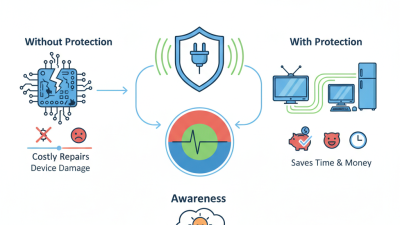
In today’s super busy electrical world, there’s a huge buzz around reliable Overload Voltage Protectors. Everyone’s realizing just how important these little devices are to keep equipment safe from costly mishaps. According to NEMA, electrical surges and overloads cause serious damage and rack up about $5 billion in industry costs every year — no joke. That’s why having a good Overload Voltage Protector isn’t just a nice-to-have; it’s kind of essential if you want to avoid those expensive headaches.
Recent reports even say that almost 30% of electrical failures are tied back to voltage overloads. Crazy, right? It really drives home how vital it is to choose the right protective gear. But here’s the thing — not all Overload Voltage Protectors are created equal. They come with different features, response times, and durability levels. So, figuring out what exactly you need can really make a difference.
For example, some models are pretty fancy — they might include real-time monitoring or even automatic shut-off features, which can seriously boost your system’s reliability. But, honestly? It can also get pretty overwhelming to pick from all these options. Taking a moment to think about your specific setup and what’s most important for you can really help you make smarter choices. Investing in the right Overload Voltage Protector isn’t just about tech; it’s a smart move that could save you a whole lot of trouble — time, money, and hassle, in the long run.

Understanding Overload Voltage Protectors: An Overview
Overload voltage protectors are essential devices that safeguard electrical systems from voltage surges. These surges can originate from various sources, such as lightning strikes or power grid issues. In fact, a report by the Electric Power Research Institute highlighted that nearly 30% of electrical system failures are due to voltage fluctuations. By using an effective Voltage Relay Voltage Protector, you can significantly reduce the risk of equipment damage.
Understanding how overload voltage protectors work is crucial. These devices detect abnormal voltage levels and disconnect the affected circuits. According to industry standards, an ideal protector should respond within microseconds to minimize equipment stress. Yet, many users overlook the importance of regular maintenance and testing of these devices. A study from the International Electrotechnical Commission noted that up to 20% of protectors do not function effectively due to inadequate upkeep.
Selecting the right overload voltage protector involves evaluating your specific needs. Factors like your electrical load, environment, and potential voltage spikes must be considered. Not all protectors provide the same level of protection, which makes careful research vital. Over-reliance on automatic features without understanding their capabilities can lead to unforeseen risks. It's essential to ensure that your Voltage Relay Voltage Protector aligns with industry recommendations and your operational requirements.
Types of Overload Voltage Protectors and Their Applications
Overload voltage protectors come in various types, tailored for specific applications. The most common types include surge protectors, over-voltage protectors, and voltage regulation devices. Surge protectors are essential to protect sensitive electronics from voltage spikes. They are widely used in residential and commercial settings, safeguarding everything from home appliances to IT equipment.
In industrial applications, over-voltage protectors play a crucial role. According to a recent industry report, over 30% of electrical failures are linked to voltage irregularities. These protectors ensure equipment longevity and reduce maintenance costs. Voltage regulation devices maintain a steady voltage level, vital for machinery and power systems. Lack of consistent voltage can impair equipment operations, leading to downtime.
Voltage meters are equally important. They help monitor voltage levels, providing real-time data. In sectors like manufacturing, knowing the voltage status is vital. This integration can improve safety and efficiency. While technology has advanced, not every overload protector is equal. Some may have limitations in capacity or response time. Awareness of these factors can lead to better decisions in protecting valuable systems.
Key Features to Consider When Choosing a Protector
When selecting an overload voltage protector, several key features are paramount. The efficiency of the protection mechanism is crucial. According to a recent industry report, devices with a response time of under 1 millisecond provide optimal performance. This rapid response helps prevent damage to connected appliances during voltage spikes.
Another important aspect is the device’s compatibility with various electrical systems. Not all protectors work well with different voltage levels. For instance, a typical home might experience voltage fluctuations between 110V and 240V. An understanding of your specific needs ensures proper safeguarding.
Durability is another vital factor. Many protectors have a limited lifespan, often influenced by the frequency of usage. An ideal protector should remain effective after multiple voltage surges. The Voltage Digital Voltage Protector exemplifies how a robust design can enhance longevity and reliability. Protection that lacks these features may result in repeated frustrations and financial losses. Thus, thorough research and consideration of these elements can lead to better choices and ultimately peace of mind.
What is the Best Overload Voltage Protector for Your Needs? - Key Features to Consider When Choosing a Protector
| Feature | Description | Importance | Recommended Threshold |
| Voltage Rating | The maximum voltage the protector can handle. | Essential for device safety. | 200V - 600V |
| Response Time | The time taken to respond to overload conditions. | Critical for preventing damage. | |
| Surge Current Capacity | The maximum surge current it can absorb. | Important for heavy electrical loads. | 20 kA - 50 kA |
| Indicators | Visual or audible alerts of malfunction. | Helps with proactive maintenance. | Yes |
| Mounting Options | Flexibility to fit different installations. | Affects installation ease. | Wall-mount, DIN-rail |
| Temperature Range | Operating temperature tolerance. | Crucial for reliability in extreme conditions. | -20°C to 60°C |
Assessing the Voltage Rating and Compatibility Needs
When selecting an overload voltage protector, the voltage rating and compatibility are critical factors. A protector's voltage rating defines the maximum voltage it can handle without failing. If it's too low, it may trip unnecessarily. Conversely, if the rating is too high, it could expose your equipment to damage. Understanding your system's typical voltage levels is essential. This knowledge helps you choose a protector that meets your needs without compromise.
Compatibility with your specific electrical system should also be assessed. Every system may require different connector types or operational characteristics. Some protectors work better with certain equipment configurations. Misalignment can lead to performance issues or equipment failure. Additionally, your environment matters. Consider temperature ranges and humidity levels. These factors can affect the protector's reliability.
Quality does not solely depend on price. Some lower-cost options might provide adequate protection for less critical applications. Yet, ignoring long-term reliability could be risky. It's wise to regularly review your equipment and adjust your protection strategy accordingly. As systems evolve, so do their needs, making ongoing assessment vital.
Evaluating Response Time and Protection Mechanisms
When selecting an overload voltage protector, response time and protection mechanisms are critical factors. Industry reports indicate that a device’s response time can vary from microseconds to milliseconds. This time frame defines how quickly the protector reacts to sudden voltage spikes. A faster response can prevent damage to sensitive electronic components, thus ensuring optimal performance.
Protection mechanisms differ widely among devices. Some protectors utilize metal-oxide varistors (MOVs), while others employ suppression diodes. MOVs offer high energy absorption, but their lifespan can diminish with repeated surges. In contrast, suppression diodes provide more reliable long-term protection but may not handle the same energy levels as MOVs. Research shows that devices featuring a combination of these mechanisms often yield the best results.
Evaluating your needs requires careful consideration. If you’re in an environment prone to frequent surges, choose a protector with a swift response time. However, the trade-off between speed and reliability must be carefully assessed. Consideration of installation conditions and equipment sensitivity also plays a key role. Balancing these aspects ensures you choose the right protection for your unique requirements.
Overload Voltage Protector Performance Comparison
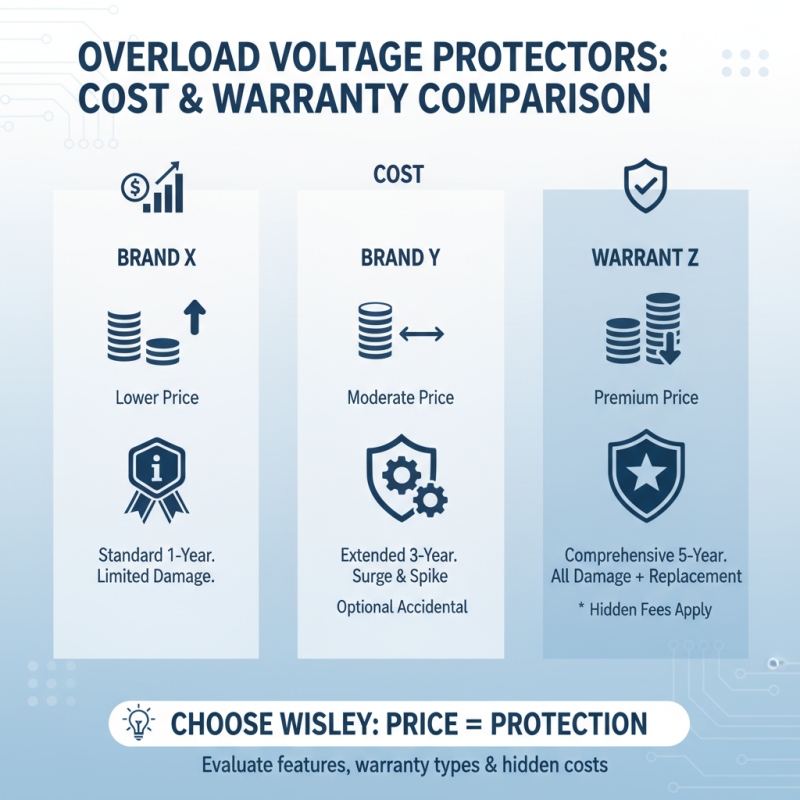
Comparing Cost and Warranty Options Among Different Brands
Choosing an overload voltage protector is not just about price. Each brand offers different warranties and features, making it essential to understand your options. Some protectors boast extensive warranties that may cover specific damage types. These warranties can offer peace of mind, but they often come with hidden costs.
Pricing can vary widely among different models. Inexpensive options may lack durability. High-end products might have better components, but do they justify the cost? Evaluating warranty terms can provide insight into a product's reliability. Some brands offer longer warranties, suggesting greater confidence in their protectors.
Understanding the balance between cost and warranty is crucial. A cheap protector could save money upfront but may fail when needed most. Consider a Protector Voltage Voltage Regulator with a solid warranty for long-lasting protection. Reflect on your needs carefully. The right choice may not always be the most obvious one.
User Reviews and Expert Recommendations for Popular Models
Choosing the right overload voltage protector can be overwhelming. Many models flood the market, each boasting unique features. User reviews are crucial. They provide insight into real-life performance. People mention reliability as a key factor. When a protector fails to trip during a surge, the consequences can be significant.
Expert recommendations highlight important characteristics. Look for options with fast response times. Some users emphasize the importance of LED indicators. These signals can alert you to potential hazards. Reviews often mention ease of installation too. If a device is difficult to set up, users may abandon it.
Reflecting on user experiences, many reveal a lack of after-service support from manufacturers. This can lead to frustration when issues arise. Potential buyers should consider this. It’s important to choose a protector with solid customer service. Only then will you ensure lasting safety for your electrical devices.
Mitigating Voltage Spikes: Analyzing the Efficacy of 3P 150VDC T2 40kA Surge Protective Devices in Medium Voltage DC Systems
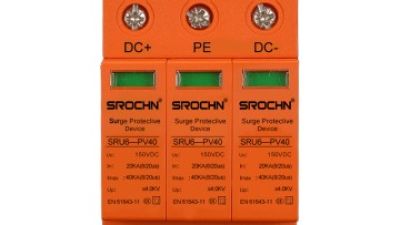
In medium voltage DC systems, voltage spikes present a significant threat to the integrity and longevity of sensitive electronic equipment. To combat these surges, the utilization of advanced surge protective devices (SPDs) has become essential. The 3P 150VDC T2 Surge Protective Device exemplifies a high-performance solution designed to deliver robust protection against lightning strikes and transient overvoltages, safeguarding critical operations within these systems.
This three-pole SPD boasts a remarkable maximum discharge capacity of 40kA and a nominal discharge current of 20kA, making it an effective barrier against damaging electrical surges. Constructed with a durable plastic housing, it ensures excellent electrical insulation and mechanical protection, allowing it to function reliably across diverse environmental conditions. Its cutting-edge design incorporates state-of-the-art protection technology, which is crucial for maintaining operational continuity in medium voltage DC applications where stability is paramount.
Incorporating such a surge protective device not only enhances the resilience of medium voltage DC systems but also contributes to the longevity of the equipment involved. By mitigating voltage spikes, the 3P 150VDC T2 SPD helps to maintain optimal performance and protects against potential disruptions, reinforcing the importance of effective surge protection solutions in today's increasingly electrified landscape.
FAQS
: The main types include surge protectors, over-voltage protectors, and voltage regulation devices. Each serves a specific purpose.
Surge protectors safeguard sensitive electronics from voltage spikes. They protect home appliances and IT equipment effectively.
Over-voltage protectors help extend equipment lifespan. They reduce downtime caused by electrical failures linked to voltage irregularities.
Voltage meters monitor voltage levels in real time. They're crucial for manufacturers to maintain safety and efficiency.
Low-cost protectors may lack durability. Consider warranties carefully; longer warranties often indicate better reliability and trust from manufacturers.
Users often prioritize reliability and fast response times. A protector should trip during surges to prevent damage.
Many users report frustration with poor after-service support. Choosing a protector with solid customer service is essential for addressing issues.
User reviews provide insight into real-life performance. They often highlight important features and potential issues with particular models.
Many buyers focus only on price rather than the protector’s reliability and warranty, which can lead to future problems.
Protectors that are hard to install may lead users to abandon them. Easy installation can enhance the overall satisfaction and safety.
Conclusion
In the quest for the best overload voltage protector, it is essential to understand the different types available and their specific applications. Overload voltage protectors are designed to shield electrical devices from voltage spikes, which can lead to equipment failure. When choosing the right protector, key features to consider include voltage rating, compatibility with existing systems, response time, and the mechanisms of protection it offers. Additionally, evaluating cost and warranty options can guide users in making an informed decision.
User reviews and expert recommendations play a significant role in highlighting popular models, giving insights into performance and reliability. By assessing these factors, individuals can select an overload voltage protector that best meets their needs and ensures the longevity and safety of their electrical devices.

 +86 13868429846
 Contact Phone
 Contact Email